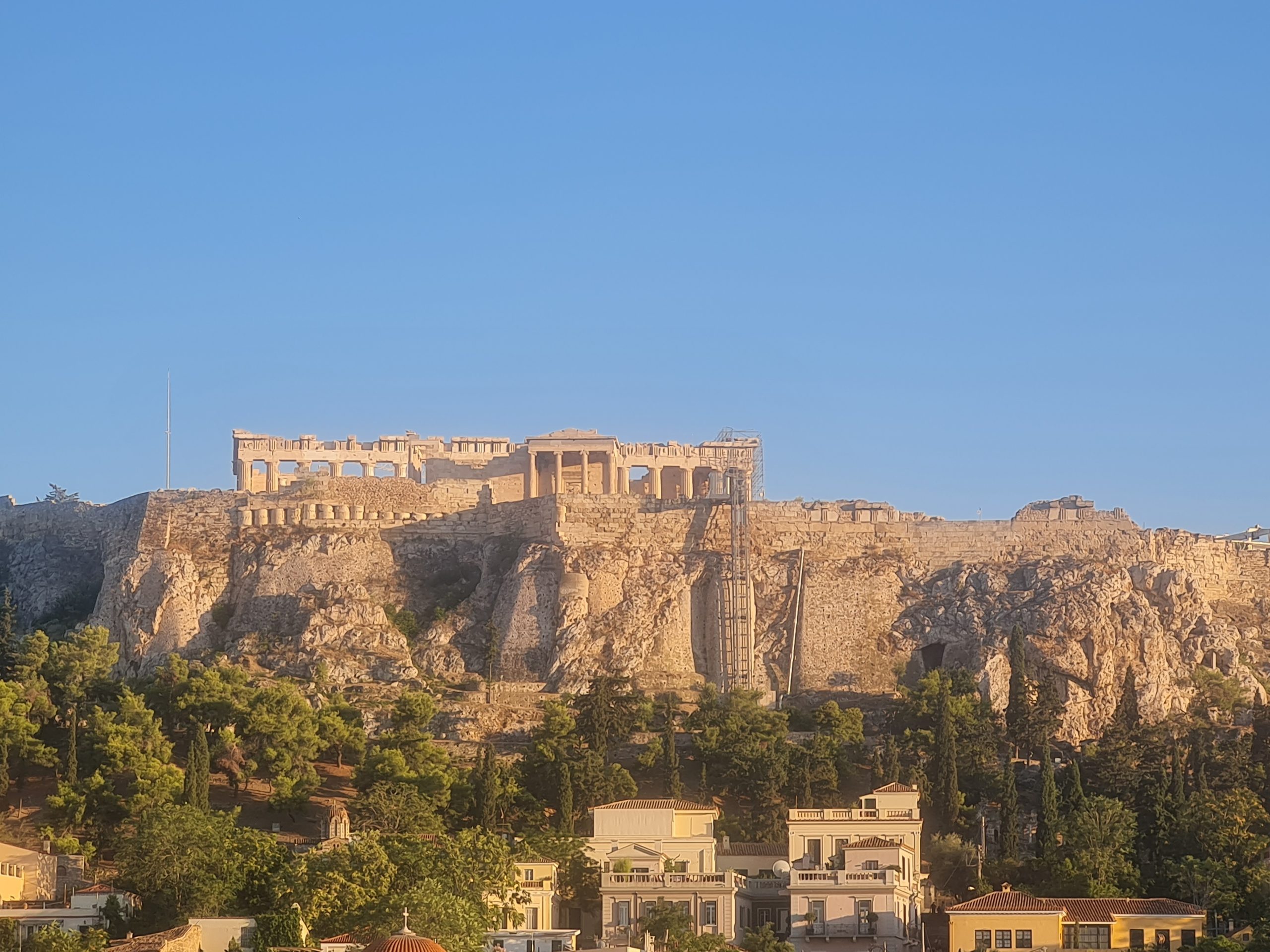
Ancient Greece: 12 Historical Sites You Need to Visit
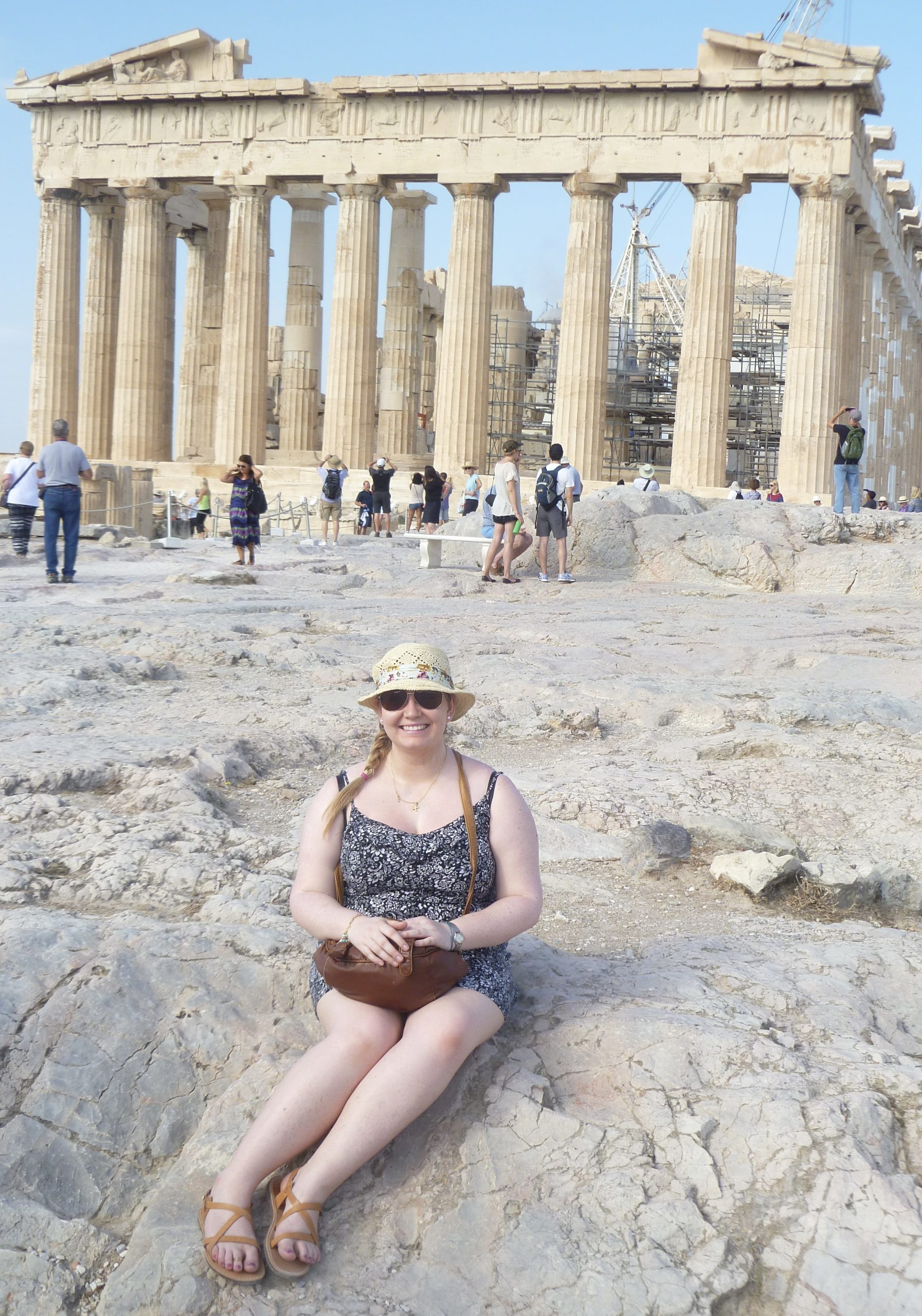
I was so excited when I first visited Greece. As you may have figured out if you have read my blog, I love history. Having studied Ancient Greece in high school, I fell in love with the country before I had even been there!
So when planning my trip, I wanted to see some of the places I had actually studied. As per usual, there were so many places to see and so little time!
Greece is one of those places that immediately comes to mind when you think about ancient civilisations. The country has layers upon layers of history and culture and has contributed so much to the Western world that we still use today.
Democracy, astronomy, mathematics, philosophy, engineering, architecture, art, medicine, fabulous gods and goddesses and their stories, marathons, the Olympic Games… I could go on, but it’s a pretty long list!
So because of all of these things, I wanted to visit some of the places where these ideas, stories and traditions were invented and started. And so I narrowed my choices down to 12 unmissable ancient and historical places in Greece.
For all of the places below you can purchase tickets through the official website Hellenic Heritage, it also contains up to date information on each site, including amenities and opening hours.
1. Athens
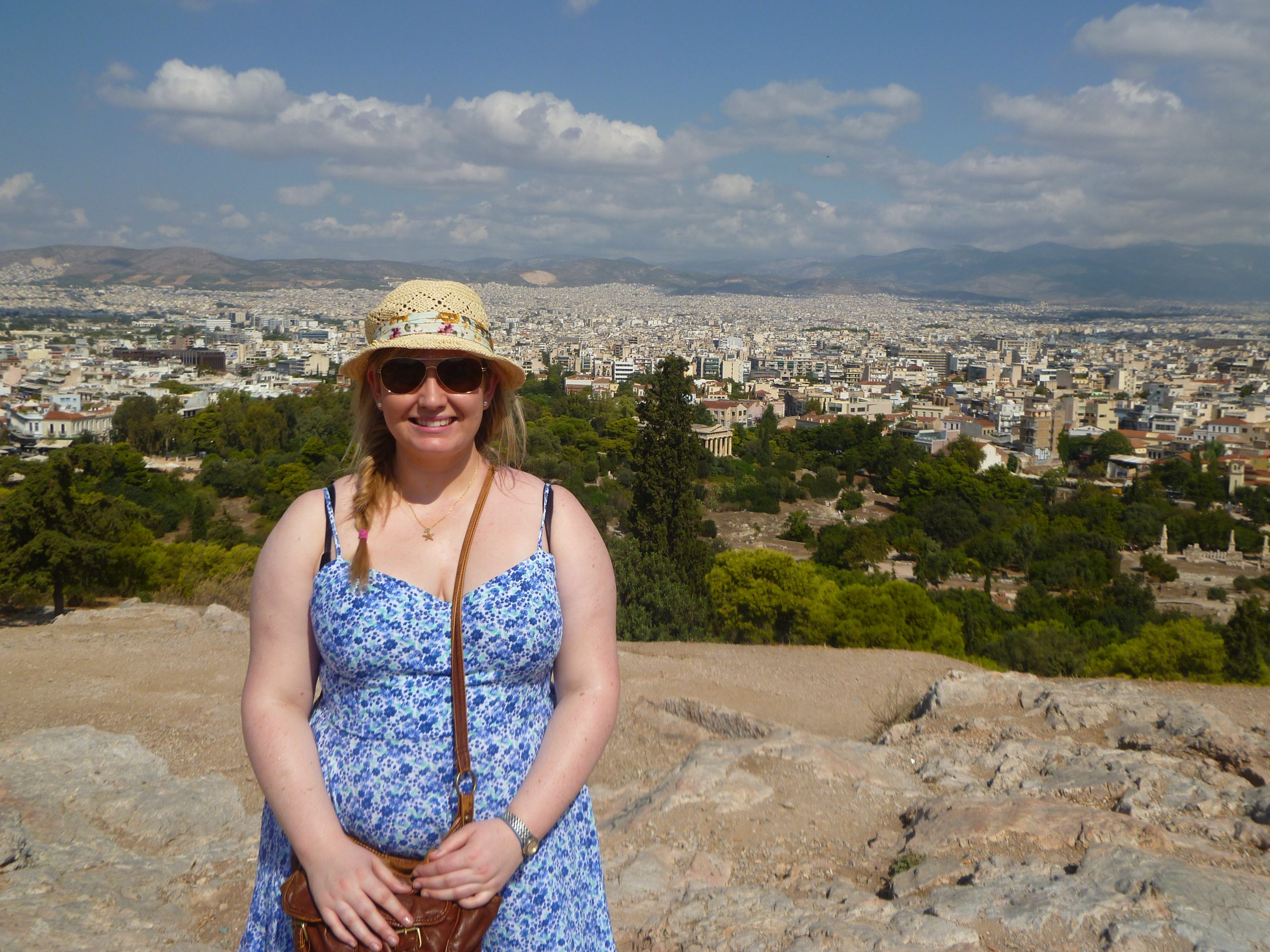
At over 3,400 years old, Athens is one of the world’s oldest continuously inhabited cities and the ancient capital is named after the goddess of wisdom, Athena.
Today, Athens is a melting pot of art, culture, people, food and, of course, history.
I fell absolutely in love with this place, to the point that I extended my time in Athens and then went back two months later because I hadn’t managed to see everything, and still feel like I haven’t!
How some people feel about Paris is how I feel about Athens.
Athens is my Paris!
One of the main reasons to visit Athens, and the top attraction in the city is to see the Acropolis, sitting on its perch above the city. The Parthenon is probably one of the most recognisable ancient Greek buildings in the world, but there is much more to the Acropolis and to Athens than just the Parthenon.
I highly recommend doing a free walking tour on your first day. It gives you a really good introduction to the city and its layout, and many tours take you past some of the major historical sites too.
Athens is also a super easy city to get around, with the metro connecting many of the key areas around the city.
For places to visit specifically in Athens check out my things to do in Athens post here.
How to get there: Athens is the easiest place on this list to reach, with international flights arriving at Athens International Airport. You can catch the metro from the airport to down town. The city is also the main transport hub for ferries leaving from Piraeus port to the Greek islands, which you can also catch the Metro to.
2. Delphi
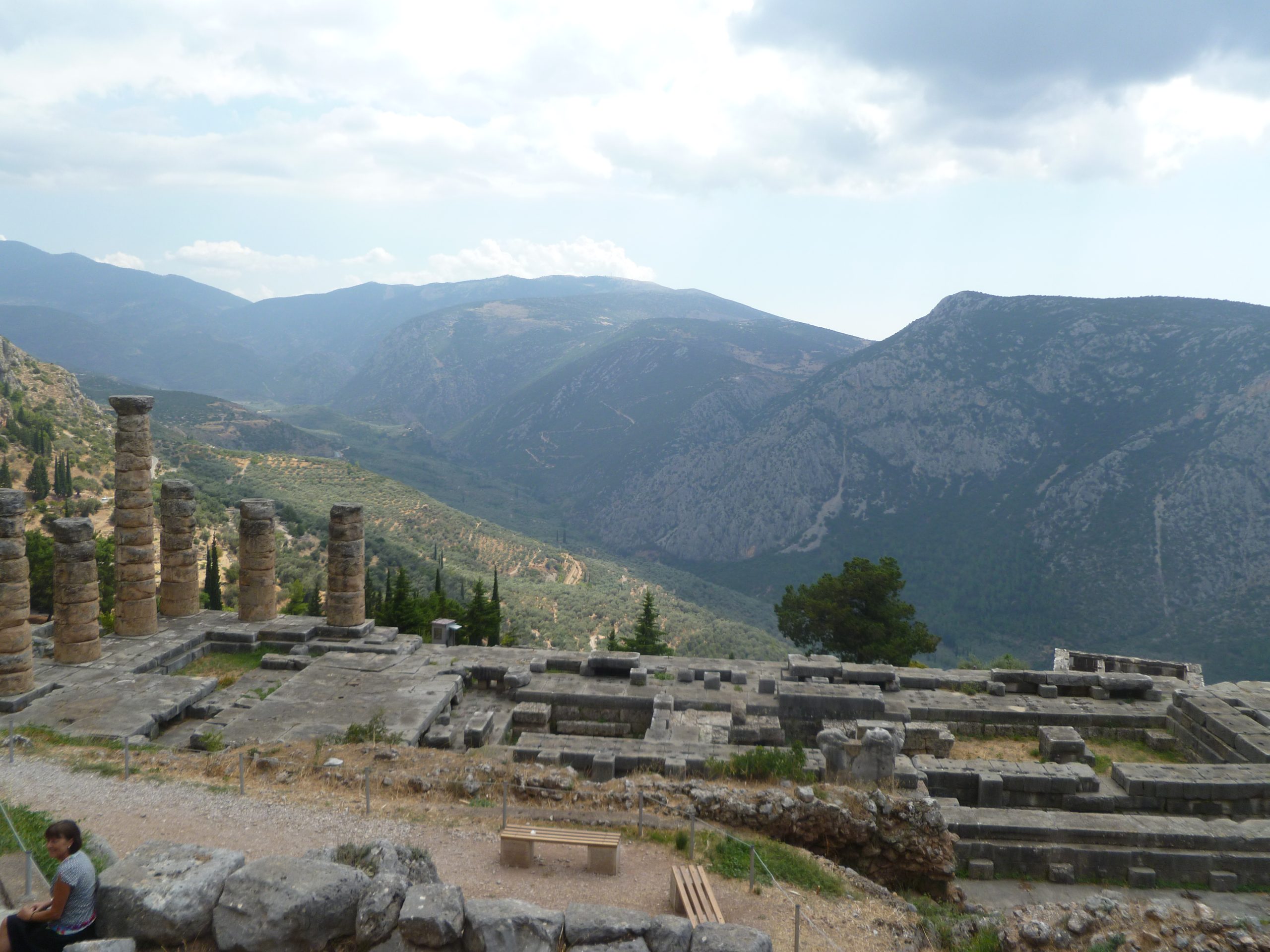
There are a few different myths about how Delphi came to be. The most popular is that the god Zeus wanted to find the centre of the earth and sent two eagles flying in opposite directions. Where they eventually crossed paths was considered the centre of the earth – Delphi.
Situated on Mount Parnassus, a few hours north of Athens, Delphi was one of the most sacred and important religious sites in the ancient Greek world.
Dating back to at least the 9th century BC, Delphi was home to the Pythia, the Oracle of Delphi, who was considered one of the most important oracles in the ancient world.
Most of what remains at the site today dates from around the 6th century BC. You can explore the Temple of Apollo, theatre, gymnasium and stadium, all set into the mountainside.
Standing amongst the ruins with the mountains all around you, it’s easy to understand why the ancient Greeks considered this such a special place.
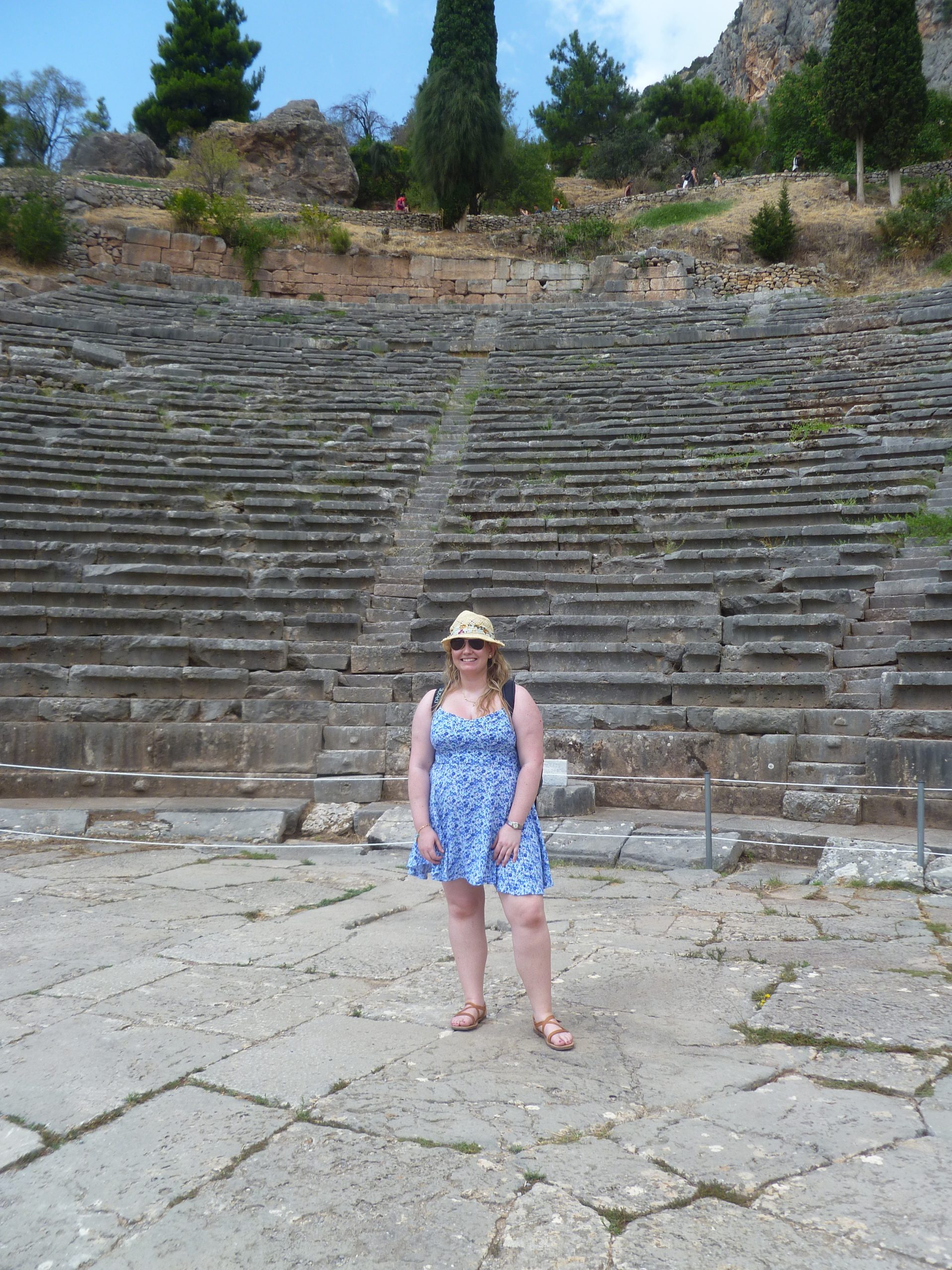
The site was also home to the Pythian Games, an ancient Greek sporting and cultural festival held every four years from 586 BC. They were similar in some ways to the Olympic Games and included athletic, musical and artistic competitions.
The archaeological site also has the Delphi Archaeological Museum, which contains many of the artefacts discovered during excavations of the site.
How to get there: The easiest way to visit Delphi is on a day trip from Athens. There are organised day tours, or you can travel independently by bus.
3. Thera (Thira/Santorini)
Santorini is a tourist hotspot for people wanting to visit the Greek islands and get those classic Oia sunset photos.
But for history buffs like me, Santorini is fascinating for an entirely different reason – the Thera eruption and, of course Atlantis! (Although those theories have pretty much been debunked these days 😞. Most actually suspect it is in southern Spain these days).
Located around 200km from mainland Greece in the Aegean Sea, although the island was officially renamed Thira in the 19th century after a spartan leader Theras, it is still widely known as Santorini. Thera is the ancient name for this island. Confused yet?
The Thera Eruption, also known as the Minoan eruption, was a gigantic volcanic eruption that occurred around 1600 BC turned the island into a giant caldera and wiped out the most advanced civilisation of the ancient world, the Minoan civilisation. Aside from the island of Crete, Thira is the only other place evidence of this civilisation has been found.
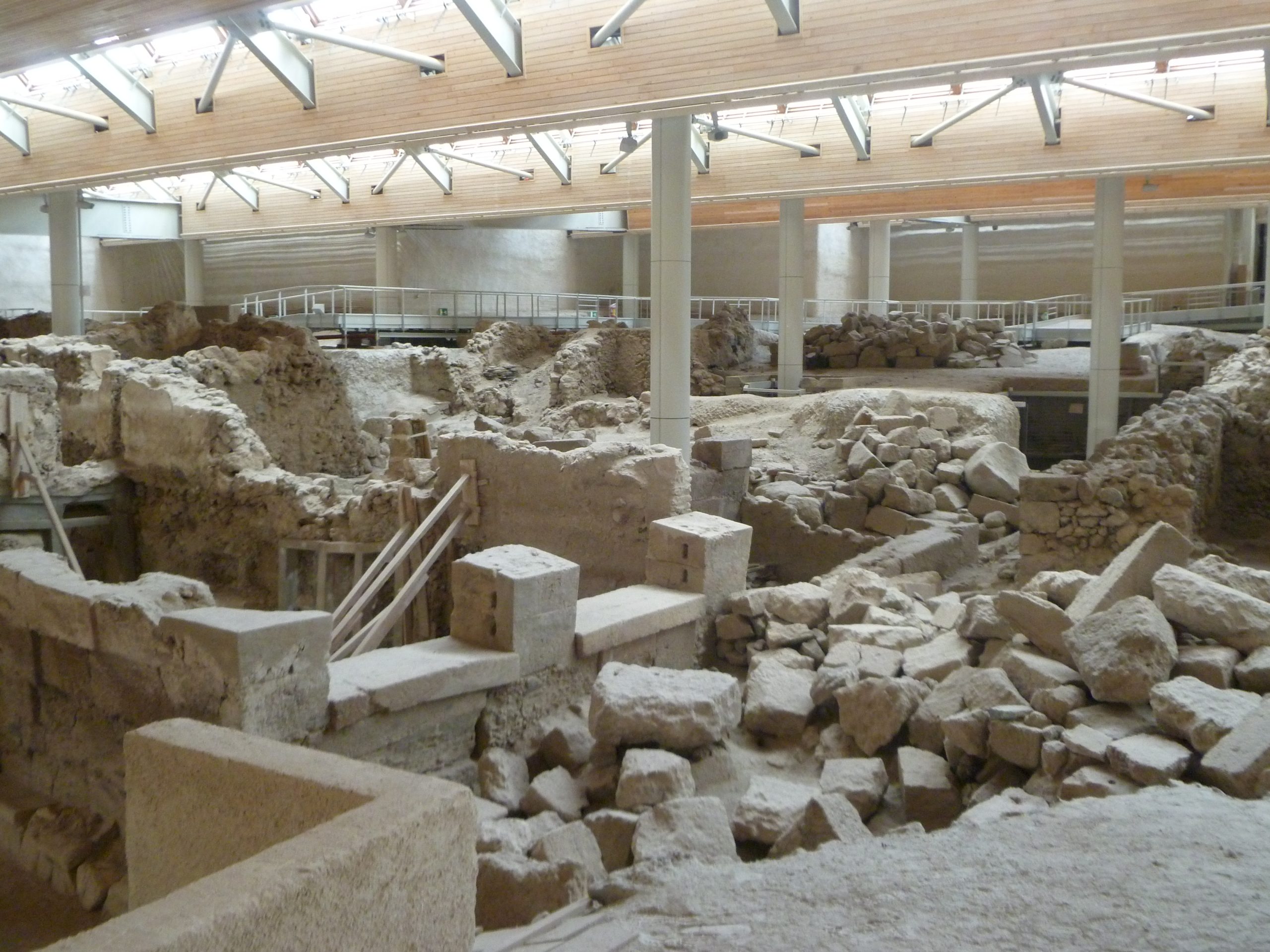
The archaeological site of Akrotiri is one of the most fascinating places on the island.
Excavated from 1967 onwards, the ancient settlement was found buried beneath metres of volcanic ash. What was uncovered was an incredibly advanced Bronze Age settlement, with carefully planned streets, buildings, drainage systems, storage areas and beautiful frescoes.
Unlike Pompeii and Herculaneum, where large numbers of human remains were discovered following the eruption of Mount Vesuvius, no human remains have been found at Akrotiri. Archaeologist suspect that the day or so between the earthquakes and the full eruption of the volcano the people of the city were able to escape the city.
I found a great novel about the island during the eruption in a bookstore in Fira the day after I visited Akrotiri called
Atlantis Never Lost: The Story of Santorini by George Koukoulas, which you can read my review of here.
In the town of Fira, you can also visit the Archaeological Museum of Thera, which contains artefacts from the island and information about its ancient history.
And if you’re visiting Santorini, make sure you take a boat cruise around the caldera, where you can visit the volcanic island of Nea Kameni, swim in the thermal waters the island, go wine tasting at some of the island’s vineyards and, of course, watch that famous Oia sunset.
How to get there: Local buses run regularly between Fira and Akrotiri. Santorini is also connected to mainland Greece by ferry, with services departing from Piraeus and other Greek islands.
4. Ancient Corinth
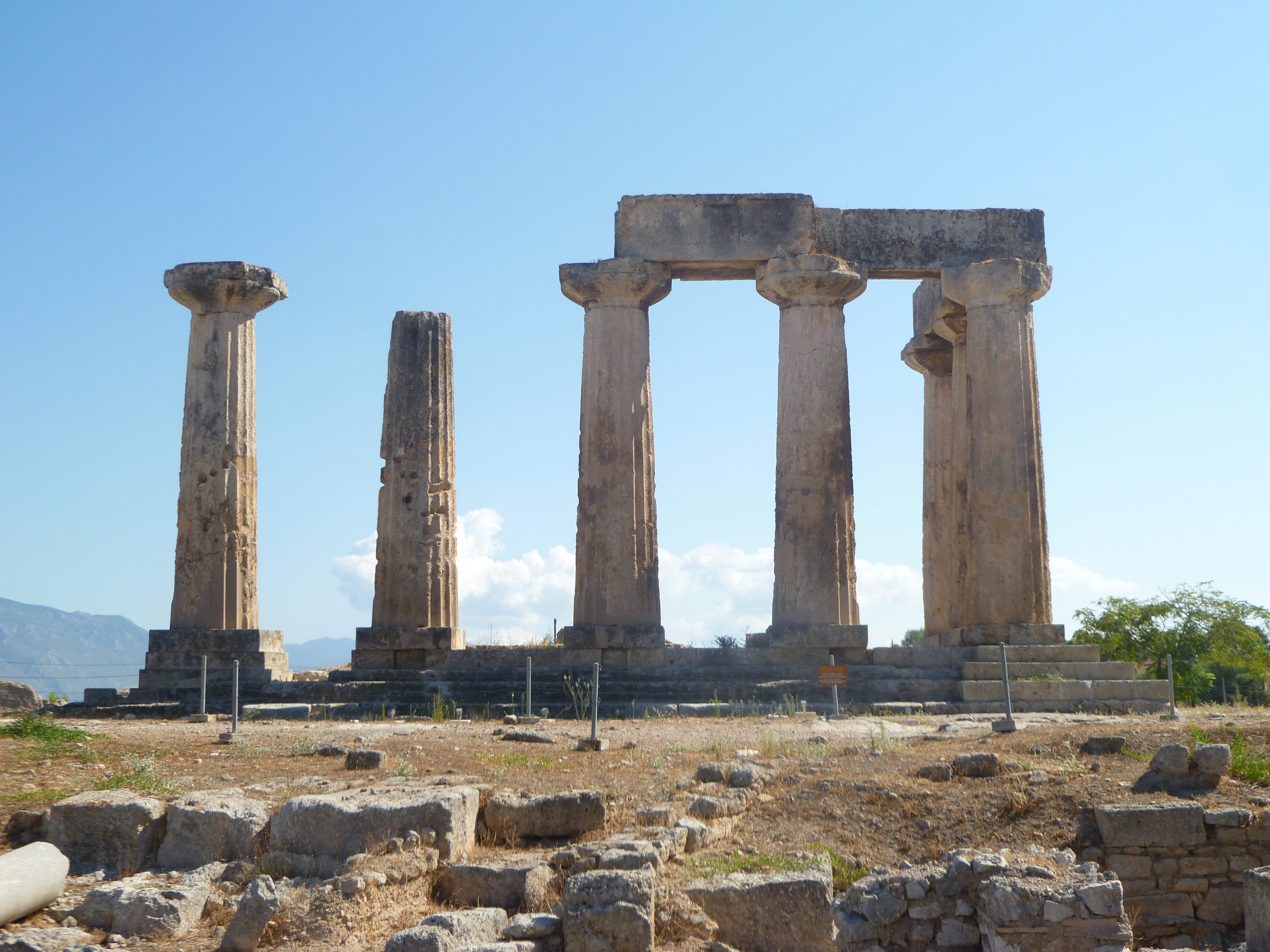
The ancient city of Corinth has a history stretching back thousands of years and was once one of the most important cities in Ancient Greece.
Since the 8th century BC, because of its strategic location on the narrow strip of land connecting mainland Greece with the Peloponnese, Corinth became an important centre for trade and commerce.
At its height, Corinth was wealthy and powerful enough to rival Athens and was famous for its pottery, particularly its distinctive black-figure pottery.
According to mythology, the city was founded by Corinthos, a descendant of the god Zeus.
Like many ancient Greek cities, Corinth was destroyed and rebuilt several times throughout its history. One of the most significant moments came in 146 BC when the Romans destroyed the city.
It was later rebuilt as a Roman colony in 44 BC and became an important administrative centre for the region. The ancient site of Corinth was also then destroyed in a earthquake in 1858, whoever much of it still stands today.
You can explore the archaeological site of Ancient Corinth, including the impressive Temple of Apollo, which dates back to the 6th century BC.
The modern town of Corinth is located several kilometres away from the ancient site.
Corinth is also famous for the Corinth Canal, which cuts through the narrow Isthmus of Corinth and separates the Peloponnese from mainland Greece.
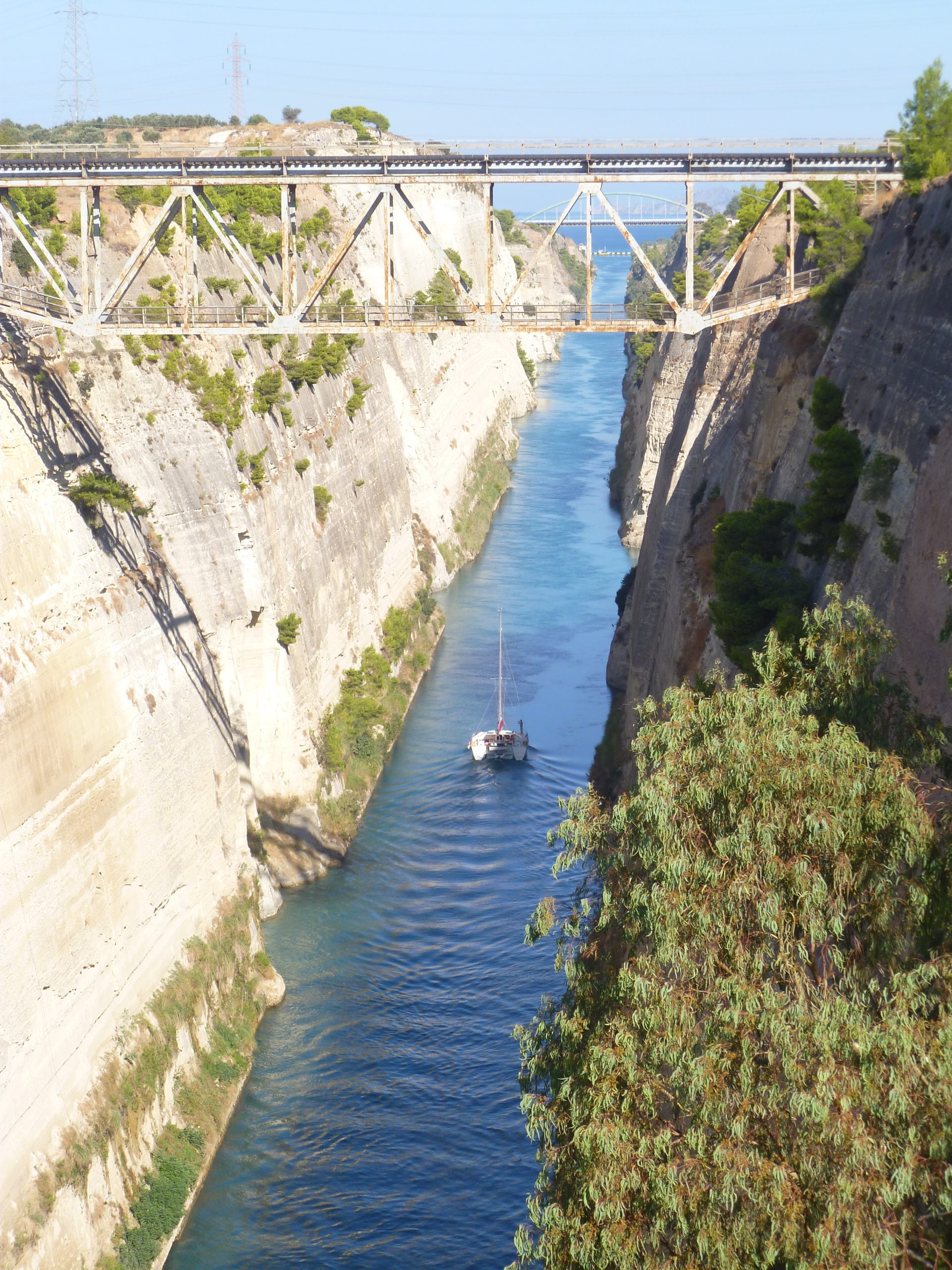
There were attempts to create a canal here as far back as ancient times, but the modern canal was constructed in 1881. It is around 6.4km long but only around 24 metres wide, making it too narrow for many modern ships.
Ancient Corinth makes for an easy day trip from Athens and is also close to another must-see archaeological site – Mycenae.
You know, home of Agamemnon, who went to war with the city of Troy over his wife Helen of Troy… yep, that one!
How to get there: Ancient Corinth is around 80km from Athens and can be visited by car, bus or as part of an organised day trip.
5. Nafplio and Epidaurus
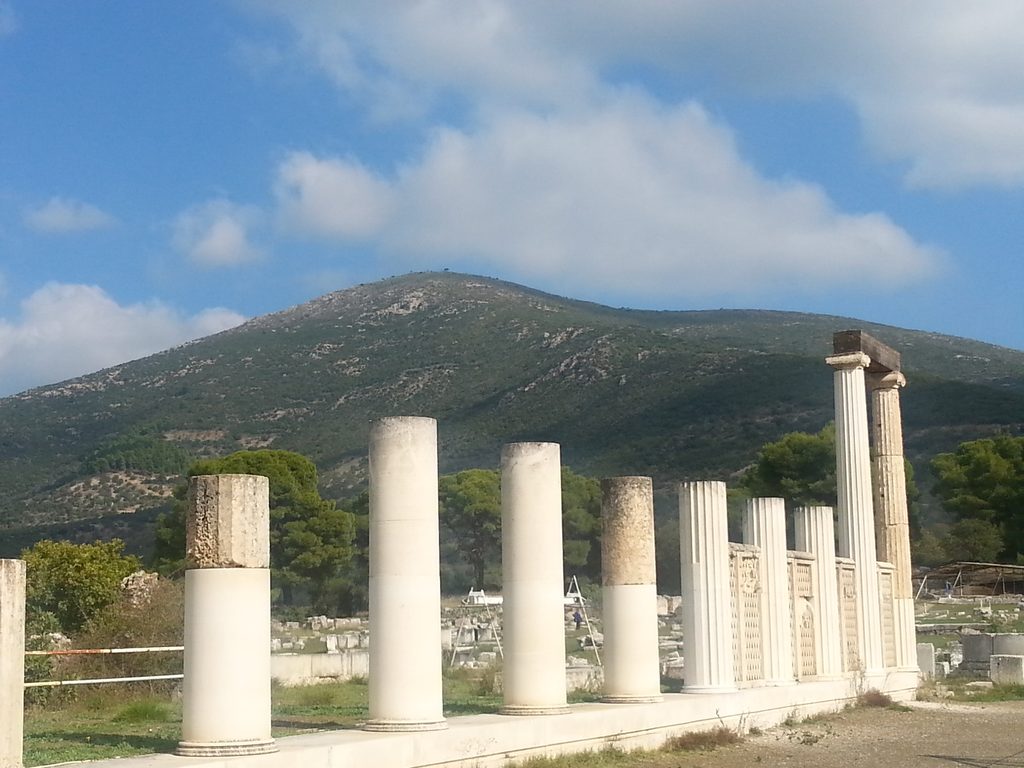
Nafplio is one of those places where you can combine history with a beautiful Greek seaside town.
Located in the Peloponnese, Nafplio was one of the first capitals of modern Greece and has a beautifully preserved old town filled with colourful buildings, narrow streets, waterfront restaurants and historic buildings.
It is also a great base for exploring some of the ancient sites in the surrounding area.
One of the highlights is Epidaurus, home to one of the best-preserved ancient theatres in Greece.
Built in the 4th century BC, the Theatre of Epidaurus is famous for its incredible acoustics. Even sitting high up in the theatre, you can apparently hear someone speaking from the centre of the stage below.
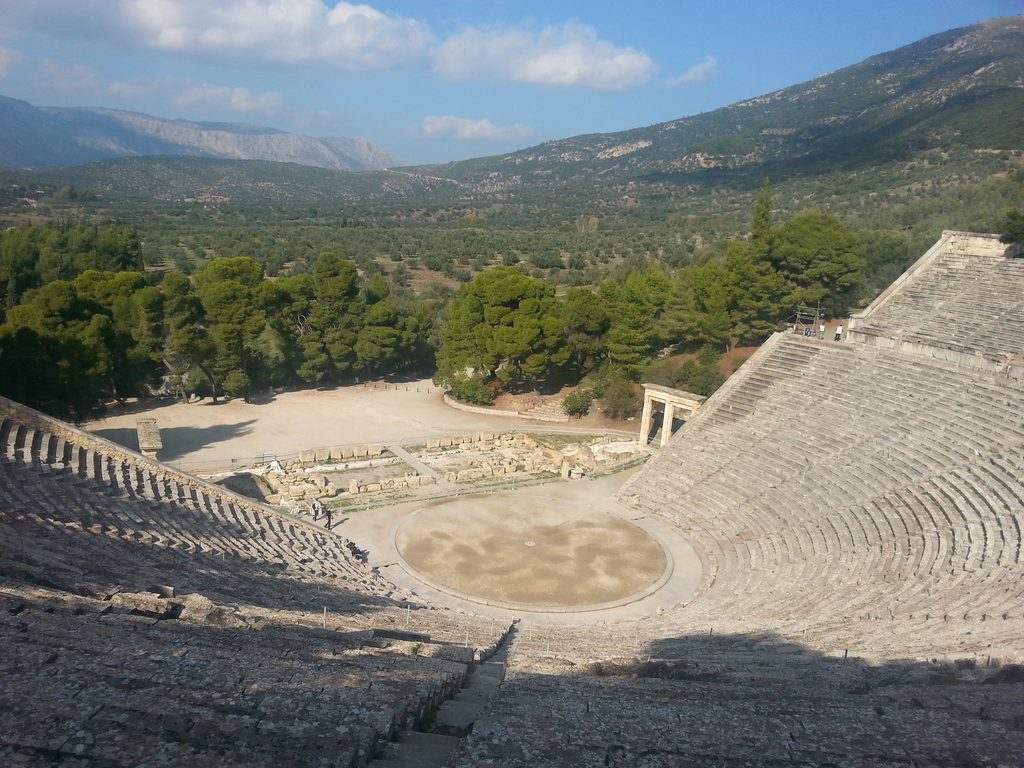
And it isn’t just an ancient ruin sitting empty. The theatre is still used for performances today, particularly during the annual Athens and Epidaurus Festival. The actual reason I wanted to come here though, because to be honest I didn’t actually know about the theatre part, until I actually got to the site and read about it- No, actually it was this part.
The wider archaeological site was an important sanctuary dedicated to Asclepius, the ancient Greek god of healing. People travelled from all over the Greek world to Epidaurus seeking treatment, with the sanctuary developing into a place where people could stay, receive care and take part in various healing practices.
As a nurse, this was the part I found particularly interesting.
Epidaurus is one of the earliest examples of people coming together in one place specifically for healing and care, with dedicated spaces for patients, treatment and recovery.
Sound familiar?
Yep!
A hospital.
While it wasn’t a hospital in the modern sense, it was an early example of the idea of bringing people who were sick together in a dedicated place to be cared for and treated. A very important step towards the concept of a hospital as we know today.
How to get there: Epidaurus is easiest to visit by car or as part of a day trip from Nafplio or Athens.
6. Mount Olympus
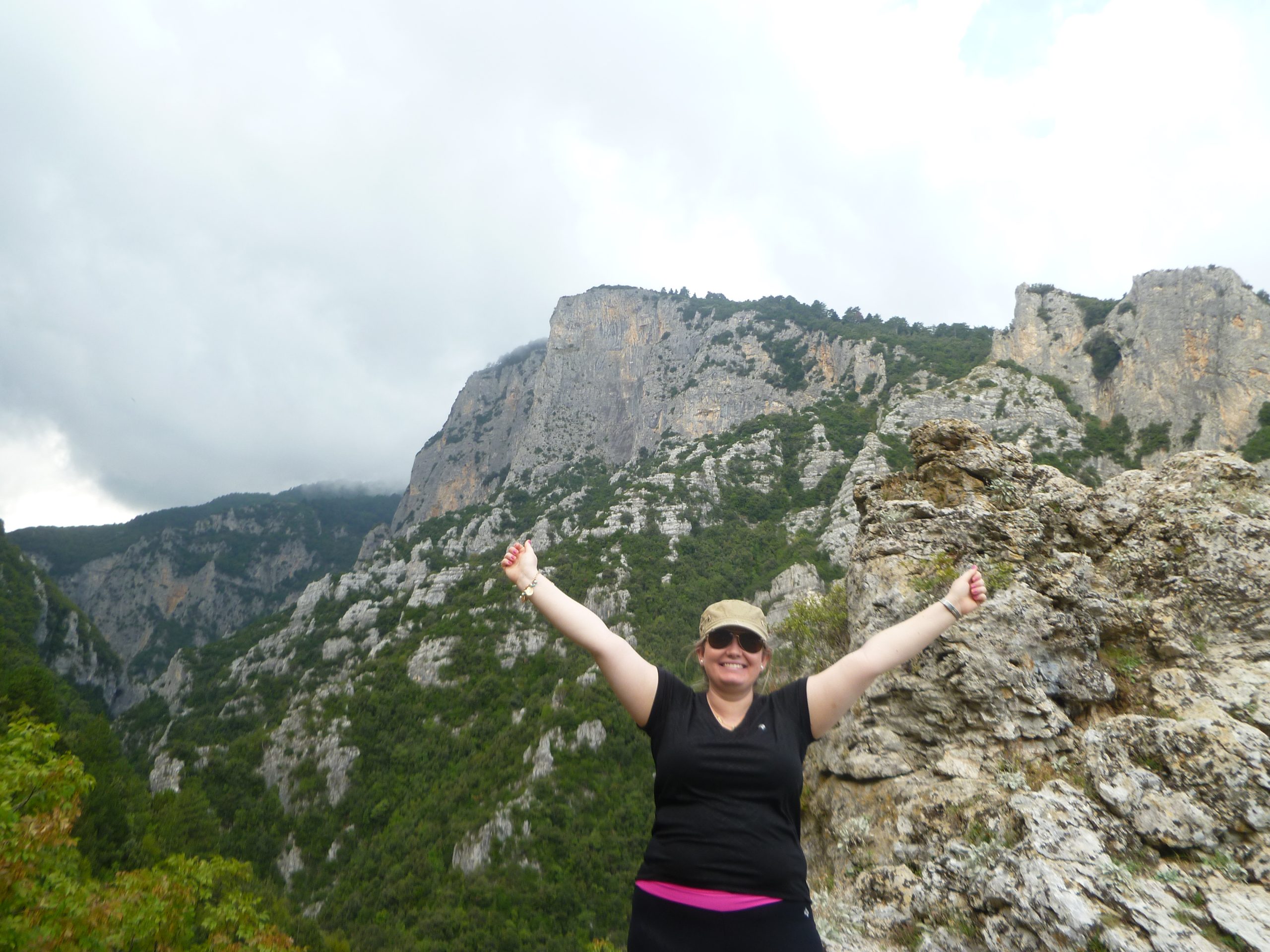
Whether you know Mount Olympus as the infamous home of the Greek gods through myths and legends, or because you watched Disney’s Hercules too much as a child, Mount Olympus is one of the most famous places in Greek mythology.
At 2,918 metres, Mount Olympus is the highest mountain in Greece and was believed by the ancient Greeks to be the home of the twelve Olympian gods.
According to mythology, Zeus ruled from the top of the mountain while the gods lived in their magnificent palaces hidden amongst the clouds.
Obviously, you won’t find Zeus sitting around waiting for tourists when you get there, but the mountain is still an incredible place to visit.
Today, Mount Olympus is a popular destination for hiking and outdoor activities. The surrounding area is protected as a national park and has a variety of walking trails.

You can get as far as Prionia car park, by car and then climb the rest of the way. Much of the rest of the national park is beautiful, with waterfalls and streams that you can drink straight from and views looking out to the ocean.
For history and mythology lovers, visiting Mount Olympus is less about seeing ancient ruins and more about seeing the landscape that inspired some of the most famous stories in Greek mythology.
How to get there: The town of Litochoro is one of the main gateways to Mount Olympus and is a good base if you want to hike the mountain.
How to get to Litochoro:
Thessaloniki: It takes just over 1 hour by train.
Athens: It takes 4.5 hours by train.
Although there is a Litochoro train station, its actually not very close to the actual town. I actually got stranded at the station as there was no taxis around at all and I had no internet either.
Instead I would suggest going to the next station which is very close, but is in the middle of a town, which is called Leptokarya. You are more likely to be to get a Uber or taxi relatively easy.
7. Palace of Knossos, Crete
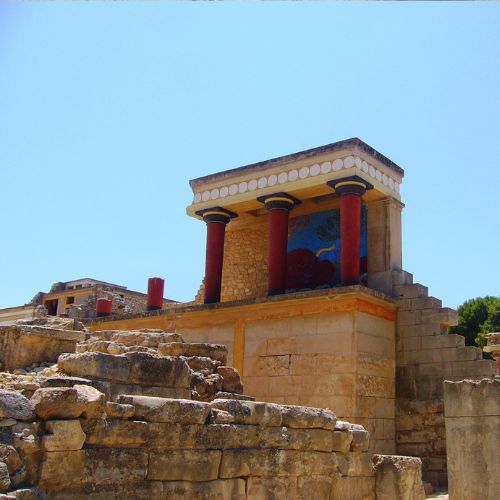
If you want to go even further back into Greece’s history, the ancients of the ancients, head to the island of Crete and the Palace of Knossos.
Knossos was the centre of the ancient Minoan civilisation, one of Europe’s earliest advanced civilisations, which flourished on Crete during the Bronze Age.
The palace complex dates back thousands of years and was much more than simply a royal residence. It was a huge complex containing courtyards, storage rooms, workshops, religious areas and residential spaces.
The site is also closely connected to one of the most famous myths from Ancient Greece — the Minotaur and the Labyrinth.
According to mythology, King Minos kept the Minotaur, a creature that was half man and half bull, inside a labyrinth beneath the palace.
Whether the myth was inspired by the enormous, confusing layout of Knossos is impossible to know, but it certainly makes visiting the ruins a little more fun!
The archaeological site was excavated in the early 20th century by British archaeologist Sir Arthur Evans, who also controversially reconstructed sections of the palace.
Some people love the reconstructions while others prefer the untouched ruins of other Greek archaeological sites, but either way, Knossos gives you a fascinating glimpse into a civilisation that existed long before Classical Greece.
How to get there: Knossos is located just outside Heraklion and is easily reached by local bus, taxi or a organised tour.
8. Olympia
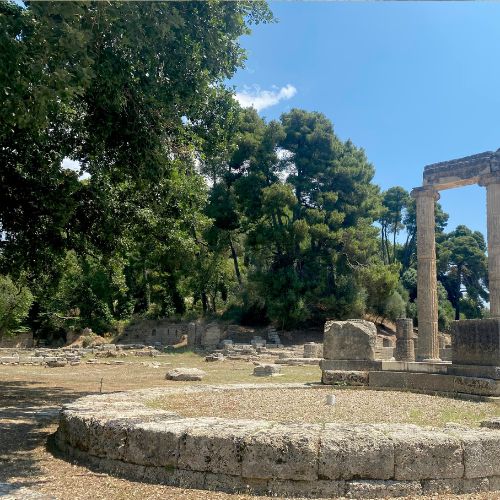
If you’ve ever watched the modern Olympic Games and wondered where it all started, this is the place to come.
Olympia is considered the birthplace of the ancient Olympic Games.
The games were held here from at least 776 BC in honour of Zeus and took place every four years for almost 1,200 years.
Athletes travelled from across the Greek world to compete in events including running, wrestling, boxing, horse racing and the famous pentathlon.
The sanctuary wasn’t just a sporting venue. Olympia was also an important religious centre, with temples and monuments dedicated to the gods.
One of the most impressive buildings was the Temple of Zeus, which once housed a huge statue of Zeus that was considered one of the Seven Wonders of the Ancient World.
Today, you can walk through the archaeological site and see the remains of the temples, training facilities and stadium where the ancient athletes competed.
Standing in the ancient stadium is one of those moments where you can really picture the people who came here thousands of years ago.
How to get there: Olympia is located in the western Peloponnese and is easiest to reach by car or as day trip while in the Peloponnese area.
9. Mycenae
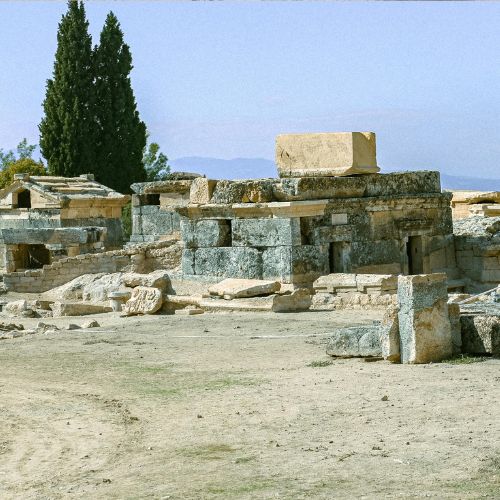
If you’ve read anything about Greek mythology, you’ve probably heard of Mycenae.
Located in the Peloponnese, Mycenae was one of the most important centres of the Mycenaean civilisation, which flourished during the Bronze Age.
It is one of the oldest major archaeological sites on mainland Greece and dates back to around 1600–1100 BC.
According to Greek mythology, Mycenae was ruled by Agamemnon, the king who led the Greek forces during the Trojan War.
Whether Agamemnon was a real historical figure is still debated, but the stories surrounding Mycenae have become some of the most famous in Greek mythology.
The archaeological site is particularly famous for the enormous Lion Gate, the main entrance to the ancient citadel.
You can also see the remains of the palace complex and several beehive-shaped tombs, including the famous Treasury of Atreus.
Walking through the Lion Gate is another one of those moments where the history you’ve read about suddenly feels real.
How to get there: Mycenae is around 120km from Athens and can easily be visited as a day trip. It is also close to Nafplio and Ancient Corinth, making it a great stop on a Peloponnese road trip.
10. Rhodes
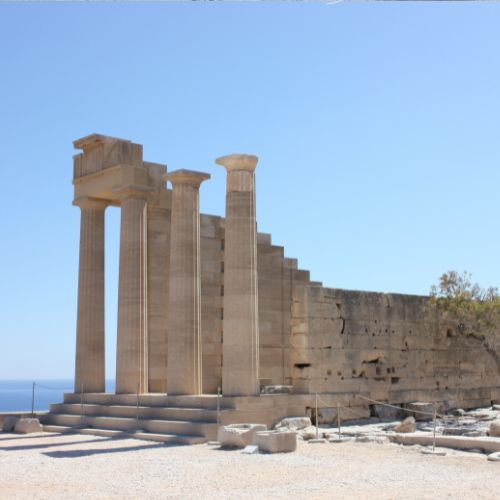
Rhodes is probably better known today for its beaches, resorts and beautiful old town, but the island also has a fascinating ancient history.
One of the highlights is the Acropolis of Lindos, positioned on a rocky hill overlooking the Aegean Sea.
The ancient city of Lindos was one of the most important cities on Rhodes and dates back to antiquity.
At the top of the acropolis you can see the remains of the Temple of Athena Lindia, which was dedicated to Athena and dates back to the 4th century BC, along with other ancient structures and fortifications.
The location alone makes this site worth visiting. The ruins sit high above the whitewashed town of Lindos, with incredible views across the blue Aegean Sea.
And this is another place where you can combine history with the more traditional Greek island experience. Spend the morning exploring the ancient ruins, then head down into Lindos for food, wander through the narrow streets or find a beach to spend the afternoon on.
How to get there: Lindos is around 50km from Rhodes Town and can be reached by local bus, taxi, rental car or organised tour.
11. Temple of Poseidon at Cape Sounion
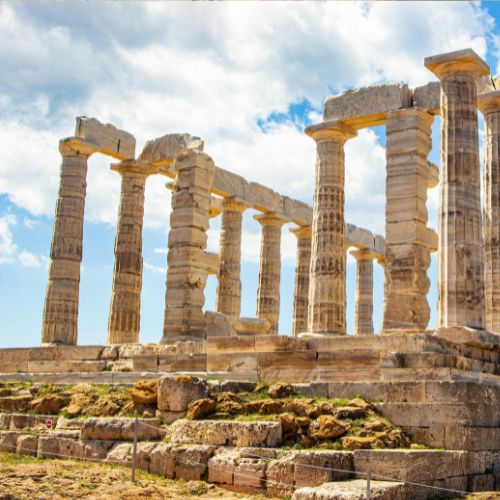
One site I haven’t been to, but is on my list next time I got back to Greece, and for good reason, is the Temple of Poseidon at Cape Sounion.
Located around 70km south of Athens, the temple sits on a rocky cliff overlooking the Aegean Sea. And to be honest, if you’re going to build a temple to the god of the sea, you cant really go past this location!
The temple that stands today was built in the 5th century BC and was dedicated to Poseidon, the Greek god of the sea. The location wasn’t just chosen for its views either. Cape Sounion was an important strategic point overlooking the sea route towards Athens.
The temple was built in the old Doric style and although only some of the original columns and ruins remain, the setting makes it one of the most spectacular ancient sites around Athens. It’s also particularly famous for its sunsets. The temple sits right on the edge of the Aegean, and as the sun goes down, the remaining marble columns are lit up against the sea. It looks pretty spectacular in photos, so this is definitely somewhere I’d love to visit for sunset one day.
Of course, because its Greece, there is of course a myth attached to the place.
According to Greek mythology, King Aegeus, the father of Theseus, stood at Cape Sounion waiting for his son’s ship to return from Crete after Theseus had gone to defeat the Minotaur. Theseus was supposed to change the black sails on his ship to white if he had survived.
Unfortunately, he forgot.
Whoops!
When Aegeus saw the ship returning with black sails, he believed his son had died and threw himself into the sea. The sea was then named the Aegean Sea after him.
How to get there: Cape Sounion can be visited as a day trip from Athens by car, bus or organised tour. If you’re visiting independently, I’d plan your timing carefully if you want to see the famous sunset.
12. Meteora
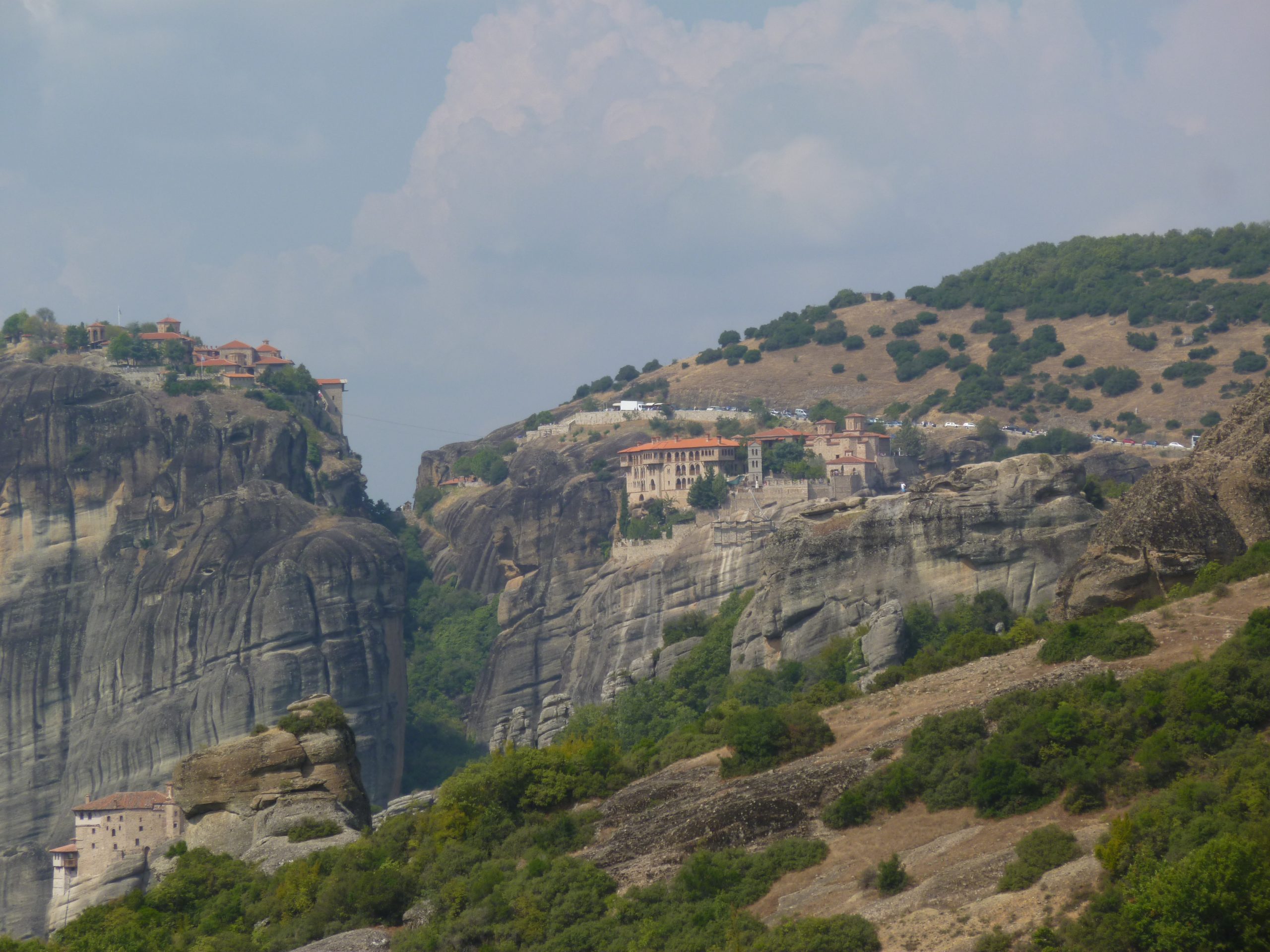
Although this is not ancient Greece, but middle ages, I couldn’t help putting it in this post as it is such a fantastic historical site!
A few hours north of Athens in central Greece stand the incredible monasteries of Meteora, perched on top of enormous rock pillars.
The first monks began settling in the area centuries ago, with the monasteries that are there now largely dating from the 14th and 15th centuries.
At its height there were around 24 monasteries in the Meteora area. Today, only six remain active and accessible to visitors.
Meteora was added to the UNESCO World Heritage List in 1988 and is one of those places that almost doesn’t look real. The combination of the towering rock formations and monasteries sitting on top makes for some pretty spectacular views.
The town of Kalabaka sits at the bottom of the pillars and is a great base for visiting Meteora. From here you can catch a bus up towards the monasteries, join a tour or walk up the paths yourself, which is what I did.
Once you get to the top, walking between the monasteries is relatively easy compared with the climb up to the cliffs. The route is roughly 7km between the first and last monasteries and gives you continuous views of the surrounding landscape.
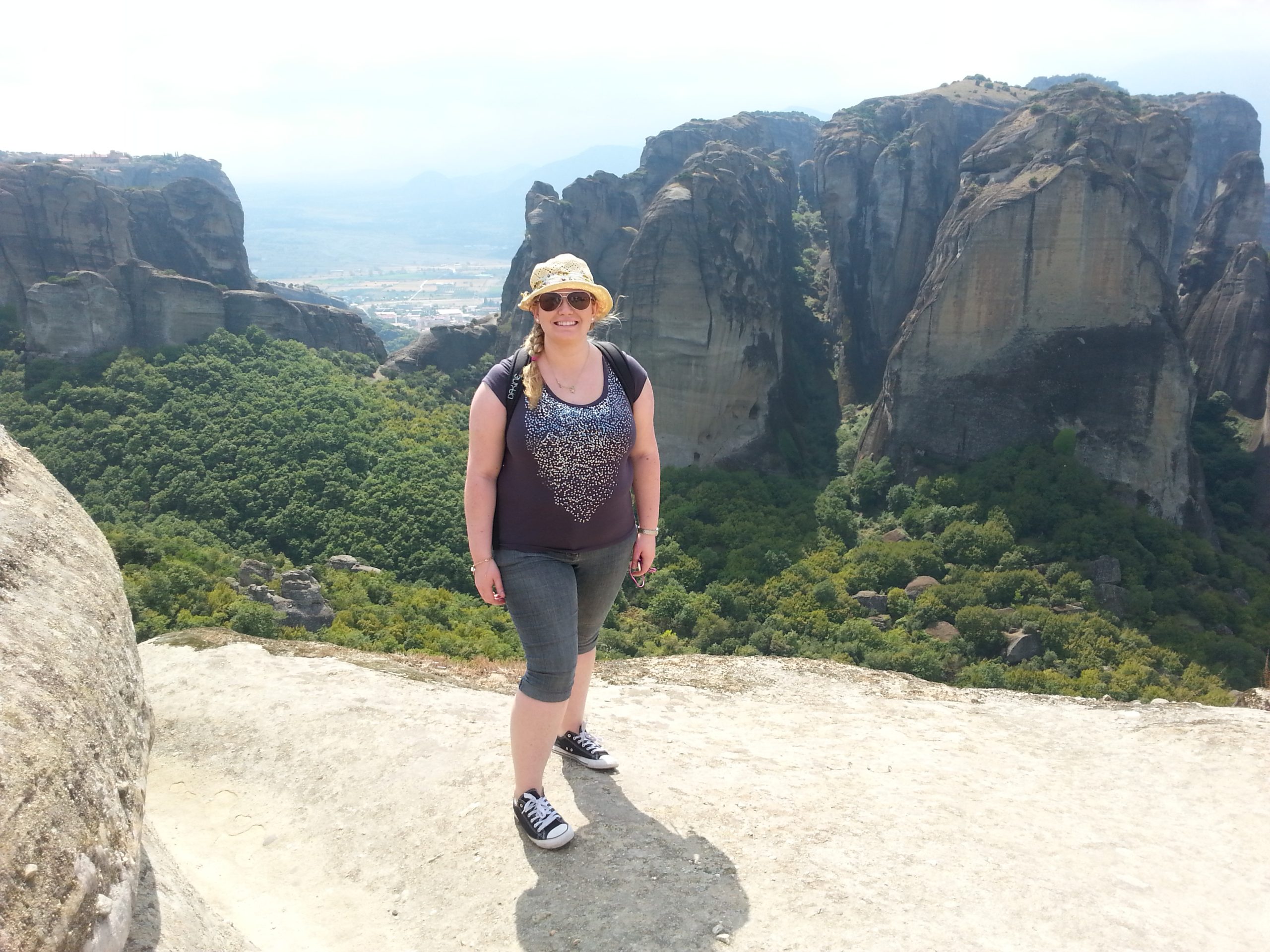
As they are still working monasteries, most you have to pay to go inside and make sure your legs are covered (they usually provide a skirt that you can pull over you clothes if needed).
Fun fact: Meteora was also used as inspiration for the Eyrie from Game of Thrones!
The six monasteries that remain are:
- Monastery of Great Meteoron
- Monastery of Varlaam
- Monastery of Rousanou
- Monastery of St Nicholas Anapafsas
- Monastery of Holy Trinity
- Monastery of St Stephen
How to get there: You can visit Meteora on a multi-day tour from Athens, or travel independently by train or bus from Athens or Thessaloniki. I recommend catching the train up from Athens which takes roughly 5.5 hours and staying a couple of nights in Kalabaka, which gives you much more time to explore rather than trying to squeeze everything into a day trip.
Alternatively in takes about 4 hours by train from Thessaloniki instead.
Final thoughts
There are far more than 12 ancient and historical sites in Greece.
You could spend weeks travelling around Greece and still only scratch the surface of its history. From the Minoans and Mycenaeans to Classical Greece, the Romans and Byzantines, almost everywhere you go seems to have another story attached to it.
For me, that’s one of the best things about travelling around Greece. You’re not just looking at a pile of old stones and trying to imagine what was there, you’re standing in the places where some of the stories, ideas and inventions that shaped the world actually happened.
And as someone who studied Ancient Greece at school, being able to finally stand in places like the Acropolis, Delphi, Olympia and Thera was pretty amazing!
So if you’re planning a trip to Greece and love history, don’t just stick to the beaches and islands- there is so, so much more to Greece! Make some time for Ancient Greece too. You won’t regret it.
Check out Hellenic Heritage to purchase tickets to these sites.
A Quick Guide to the Gods and Goddesses of Ancient Greece
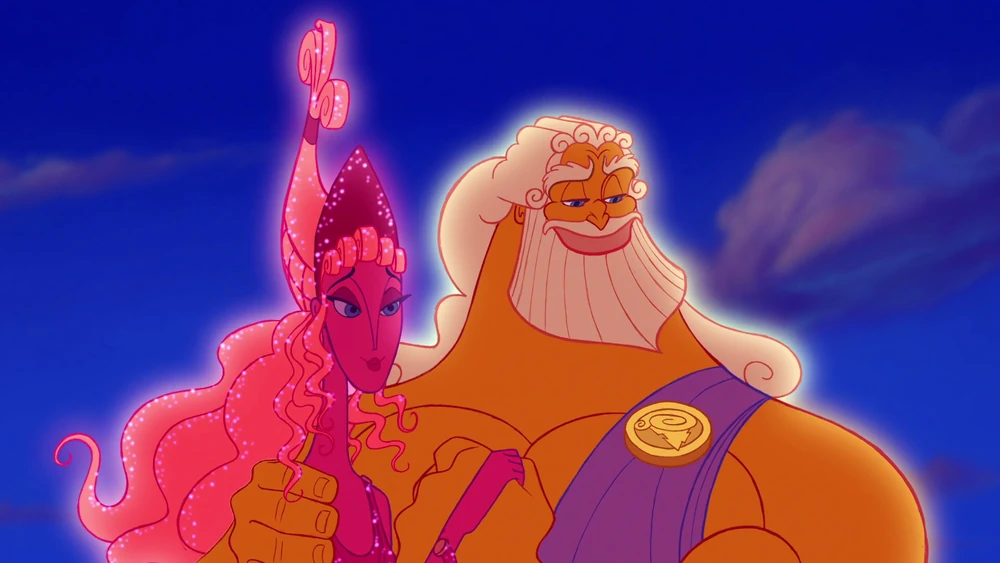
One thing as with much of history, and especially with ancient times, much of people’s lives were influenced by the gods at that time. They created beautiful monuments and temples for these gods and heroes and there is some fantastic mythology surrounding these characters.
I still vividly remember borrowing a myths and legends book from the school library for a class assignment when I was about 12, and one story that always stuck with me was the story of Apollo and Daphne. I’m not sure why, since its such a short story, but its such a vivid memory and its where my love of Ancient Greece grew from.
The mythology of Greece is a lot, and sometimes hard to wrap your head around so I’ve made a brief and quick list of who the gods and goddesses are, as they and their stories are woven so much into the ancient sites of Greece.
There are 12 main gods and goddesses of the 3rd generation, known as the Olympians, who lived on top of Mount Olympus.
The 1st generation was Mother Earth (Gaia) and Eros, and the 2nd generation was the Titans.
The 12 Olympians were the major gods and goddesses of Ancient Greece who were traditionally said to live on Mount Olympus. There were, many other gods and divine beings outside this group, and exactly who is counted among the twelve can vary depending on sources.
Also if you do climb Mt Olympus, I can’t guarantee you will see any of them up there! Sorry!
Zeus
Probably the most famous of them all, Zeus was the god of the sky and thunder and ruler of the Olympian gods.
Known for carrying his famous thunderbolt, which he used as a weapon against his enemies. Zeus was also known for having, shall we say, a rather complicated love life, with numerous relationships with both gods and mortals. As a result, he had a lot of children in Greek mythology.
Hera
Hera was Zeus’s sister and wife and the goddess of marriage, women and childbirth. She was also considered the protector of marriage and the family.
Despite being one of the most powerful goddesses, many of the myths about Hera involve her anger towards Zeus’s numerous affairs and the children he had with other women.
Poseidon
Brother of Zeus and one of the most powerful gods, Poseidon was the god of the sea, earthquakes and horses.
He is usually shown carrying his famous trident, which had similar powers as Zeus thunderbolt, he could use it to create storms, earthquakes and huge waves.
He was such as important god as the ocean was so important to ancient Greeks lives and the amount of islands in Greece!
Demeter
Demeter was the goddess of agriculture, harvest and fertility of the earth.
She was the mother of Persephone, and their story is one of the most famous myths in Greek mythology. The story of Persephone’s abduction by Hades was used to explain the changing of the seasons.
Aphrodite
Born from sea foam in one of the most famous versions of her origin story, Aphrodite was the goddess of love, beauty and desire.
She was married to Hephaestus, although Greek mythology is certainly not short on stories about gods having affairs and complicated relationships!
Artemis
Artemis was the daughter of Zeus and the twin sister of Apollo.
She was the goddess of womanhood, Pristine nature and patron of animals and represented the moon. Artemis and Apollo were famously born on the island of Delos.
Apollo
Twin brother of Artemis and son of Zeus, Apollo was the god of sun, music, poetry, prophecy, healing and foretelling.
He was also closely connected with Delphi, where the Oracle of Delphi served Apollo at his temple.
Which brings us back to one of the places on this list!
Ares
Ares was the son of Zeus and Hera and the god of war.
Although he was an important figure in Greek mythology, Ares was never very much liked by the ancient Greeks. He represented the more brutal and chaotic side of warfare, unlike Athena. He was however, revered in Ancient Rome.
The Romans later identified Ares with their own god of war, Mars, who became a much more important figure in Roman religion.
Athena
Athena was the goddess of wisdom, strategic warfare and the protection of cities.
According to one of the most famous myths about her birth, Zeus swallowed her mother, Metis, while she was pregnant because of a prophecy that their child would eventually overthrow him. Athena later emerged fully grown and armed from Zeus’s head after he asked for it to be chopped off due to a headache. Later a favourite of his children, Zeus gave his shield and thunderbolt to her.
Athena became the patron goddess of Athens, after winning a competition against Poseidon to become the city’s protector. She offered the people an olive tree, while Poseidon offered a spring of water.
The people chose Athena’s gift, and the city was named after her.
You can probably guess why the Acropolis and the Parthenon feature Athena so prominently!
Hermes
Hermes was the messenger of the gods and the son of Zeus.
He was also the god of travellers, merchants, shepherds and thieves. He is usually recognisable by his winged sandals and winged helmet.
Hephaestus
Hephaestus was the god of fire, metalworking, blacksmiths and craftsmanship.
He was married to Aphrodite and was famous for creating incredible weapons, armour and objects for the gods. His creations included weapons and armour belonging to some of the most famous figures in Greek mythology.
Unlike many of the other gods, Hephaestus was often portrayed as physically imperfect, which was unusual in the stories about the otherwise seemingly perfect Olympian gods.
Dionysus
And finally, we have Dionysus, the god of wine, celebration, theatre and religious ecstasy.
He was the son of Zeus and the mortal woman Semele and is one of the more unusual members of the Olympians because, unlike most of the others, he wasn’t born as a god.
And considering how important wine, festivals and theatre were in Ancient Greece, it makes sense that Dionysus had an important place in Greek culture.
Why Greek mythology makes visiting these sites even more interesting
One of the things I love about visiting ancient sites in Greece is that knowing some of these stories makes the ruins feel much more alive.
When you’re standing in front of the Parthenon, you’re not just looking at an old building, you’re looking at a temple dedicated to Athena.
When you visit Delphi, you see the place people lined up to ask the Oracle a question.
At Olympia, you’re standing in a sanctuary dedicated to Zeus.
And when you’re wandering around Mount Olympus, you’re literally standing at the legendary home of the Olympian gods.
You don’t need to know every Greek myth before visiting Greece, but knowing some of the key players definitely adds another layer to the experience!
Interested in Learning More About the Greek Gods?
The stories of Greek mythology and the legends surrounding the gods have been told and retold for thousands of years. They’ve made their way into books, movies, TV shows and countless modern stories and it’s not hard to see why. The stories are pretty legendary!
As I mentioned earlier, I love Greek mythology, and if you’ve enjoyed reading about some of the gods and their stories in this post, I’d definitely recommend picking up a book or two and diving a little deeper.
I’ve read several books that I’ve really enjoyed, particularly by Natalie Haynes and Stephen Fry, who both retell the ancient myths in a way that makes them really accessible and entertaining to read.
A few I’d recommend are:
- Pandora’s Jar by Natalie Haynes: A fascinating look at the women of Greek mythology and the stories behind some of its most famous female characters.
- Divine Might by Natalie Haynes: A collection of stories exploring the powerful goddesses of Greek mythology.
- Mythos by Stephen Fry: A retelling of the Greek myths, from the creation of the world through to the gods, monsters and heroes.
- Heroes by Stephen Fry :A follow-up to Mythos, focusing on some of the famous heroes of Greek mythology and the adventures they got themselves into.
If you’re heading to Greece and want to understand a little more about the mythology behind the temples, ruins and archaeological sites you’re visiting, these are a great place to start.